
I believe that aging is a disease. I believe it is treatable. I believe we can treat it within our lifetimes. (…). It does not matter if we can extend lifespans if we cannot extend healthspans to an equal extent. David Sinclair (Australian biologist) Source
This month’s theme: Poll results on longevity with Nira data
If new medical treatments allowed the average person to live decades longer in good health, would people actually want that?
The idea of dramatically extending human lifespan has long occupied a strange place in public discourse. To some, it represents one of humanity’s greatest opportunities: the chance to eliminate age-related disease and add decades of healthy life. To others, it raises unsettling questions about inequality, meaning, power, and the future structure of society. A new global survey suggests both instincts are alive and well.
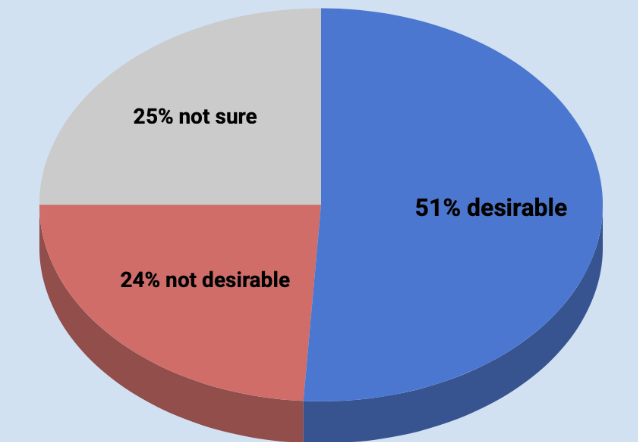
When asked whether it would be desirable if new medical treatments allowed the average person to live decades longer in good health, 51% of respondents worldwide said yes. 24%said no, while 25% said they were unsure. The headline is straightforward: a majority supports the idea.The deeper story is that support remains surprisingly fragile.
The findings are based on a large-scale online survey conducted by Nira Data between March 19 and April 21, 2026. The study gathered responses from 377,458 adults aged 18 and older across 104 countries, providing a broad global perspective on the topic. The online format enabled extensive geographic coverage and a diverse international sample. The raw data can be accessed here.
Despite being framed in perhaps the most favorable way possible—longer life, good health, average-person access—the concept attracts only a slim majority. One in four people remains undecided.
The Most Important Number Is Probably 25%
A quarter of respondents selected “not sure.”
In public-opinion research, large undecided populations often indicate that people have not yet formed stable views. That is significant because longevity remains a relatively novel concept for most citizens. Few people have spent much time considering the social consequences of adding decades to the average lifespan.
The survey suggests that while people broadly understand the personal benefits of better health, they remain uncertain about the societal implications of much longer lives.
A Global Consensus Is Emerging
One of the most striking findings is how consistent support is across regions.
Every region surveyed is net positive toward radical life extension.Europe emerges as the most supportive region, narrowly ahead of the Americas.
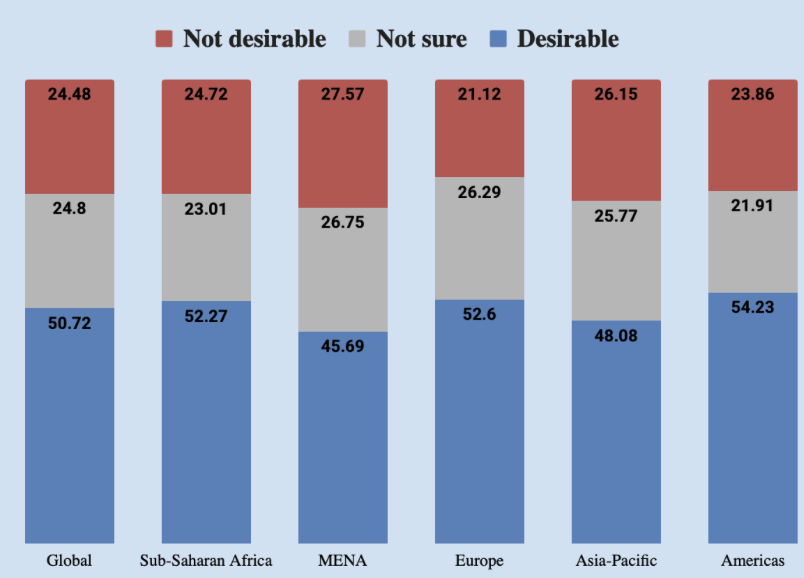
That result may surprise observers who often characterize Europeans as more cautious about emerging technologies. However, when longevity is framed as a public-health intervention rather than a disruptive technology, it aligns naturally with values around disease prevention, wellbeing, and healthy aging.
The Americas display nearly identical levels of support, reflecting a combination of optimism toward medical innovation and strong interest in personal health outcomes. Sub-Saharan Africa’s positive result is particularly notable. Despite facing more immediate public-health challenges than wealthier regions, respondents remain highly receptive to the prospect of extending healthy life. Asia-Pacific and the Middle East/North Africa region show somewhat lower enthusiasm, though both remain clearly net positive.
The overall pattern is important: support for longevity is not confined to a particular civilization, culture, or economic bloc. The differences are largely about intensity rather than direction. No region rejects the concept outright.
The Future Belongs to People Who Believe They Have One
The demographic data reveal perhaps the survey’s deepest insight.
Support for longevity is strongest among people who are economically active, socially integrated, and optimistic about their future.
The Age Pattern Defies Expectations
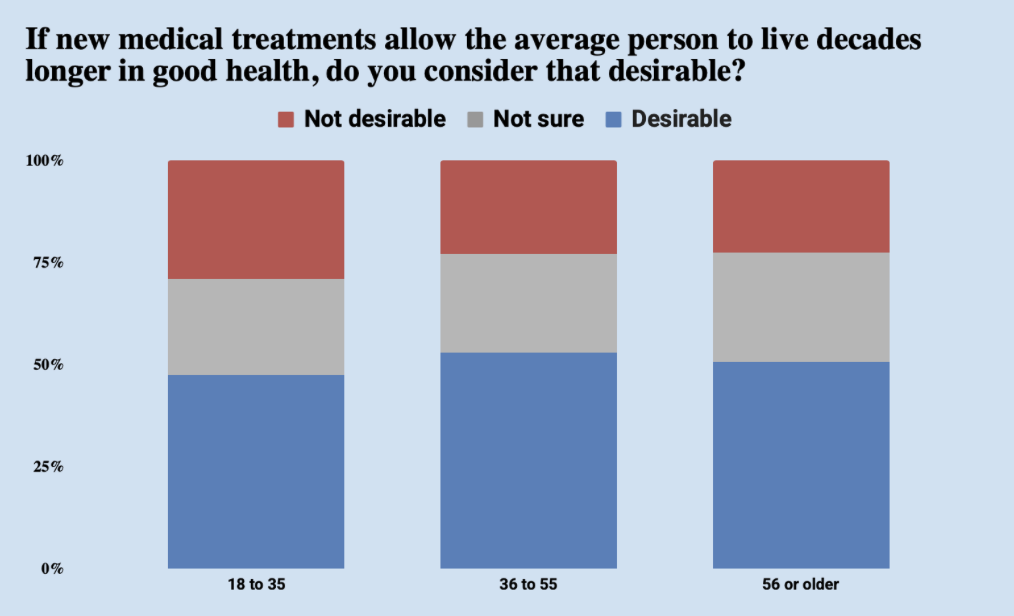
Contrary to popular assumptions, the strongest support does not come from young adults.Middle-aged respondents are the most supportive group in the survey. This makes intuitive sense. People in their forties and fifties are old enough to feel the reality of aging, yet young enough to expect they could benefit from future medical breakthroughs. For them, longevity is not a thought experiment. It is personal. The finding also undermines the common narrative that older adults oppose transformative technologies. Respondents over 56 remain strongly positive when the discussion centers on healthy years rather than simply more years.
Education Creates a Large Divide
Education is one of the strongest predictors of support.
Lower educational attainment corresponds with substantially weaker enthusiasm.This may reflect
differences in trust toward scientific institutions, expectations of access, or broader attitudes toward technological change.Importantly, lower support should not necessarily be interpreted as hostility to longevity itself. It may instead reflect skepticism about whether such advances would be accessible or beneficial to ordinary people.
Full-Time Workers Lead the Way
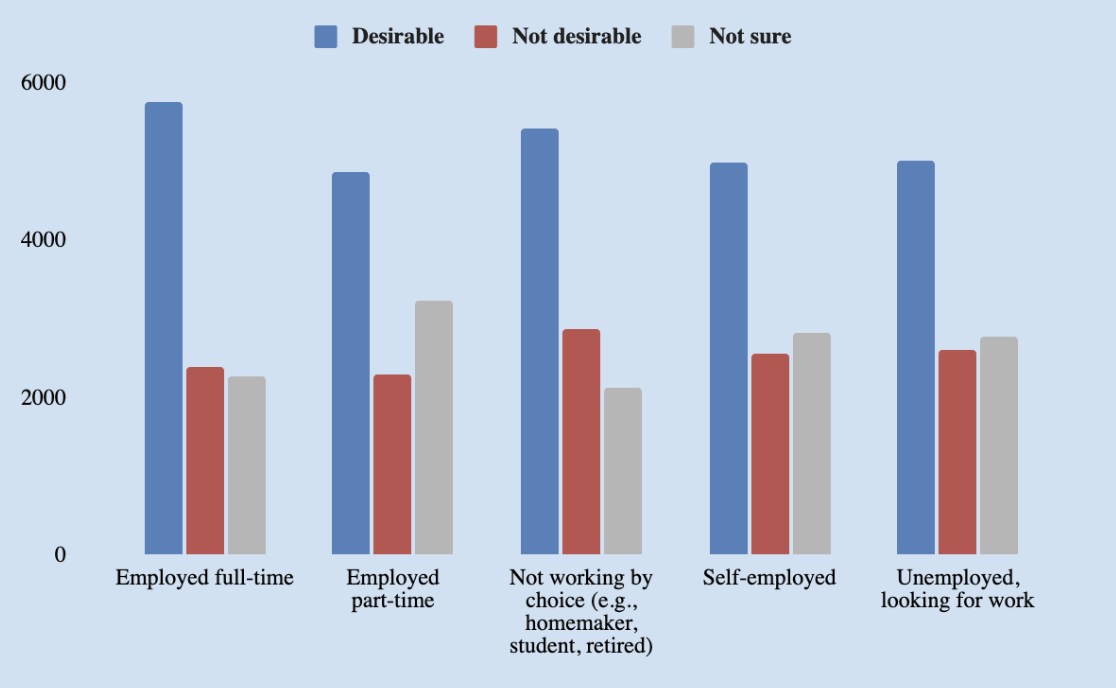
Employment status reveals one of the survey’s clearest patterns.
Full-time workers are among the most supportive groups overall. For people deeply engaged in economic life, additional healthy years can be easily translated into familiar aspirations:
- More productive years
- More family time
- More wealth accumulation
- Longer retirements
- Greater personal opportunity
By contrast, enthusiasm weakens among groups whose connection to traditional economic structures is less secure.
Women Are Slightly More Supportive
Another notable finding is the modest gender gap.
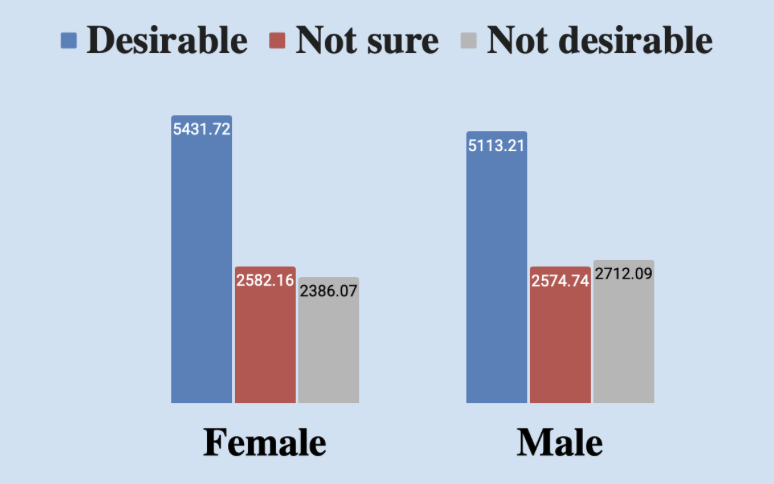
Women express somewhat greater support than men. This challenges stereotypes that enthusiasm for life-extension technologies is primarily driven by male futurists and technology enthusiasts. The likely explanation lies in framing. Longer healthy lives appeal not only as a technological achievement but also as a quality-of-life improvement, a family issue, and a caregiving issue.
Income Produces a Surprise
Perhaps the most unexpected result concerns income.
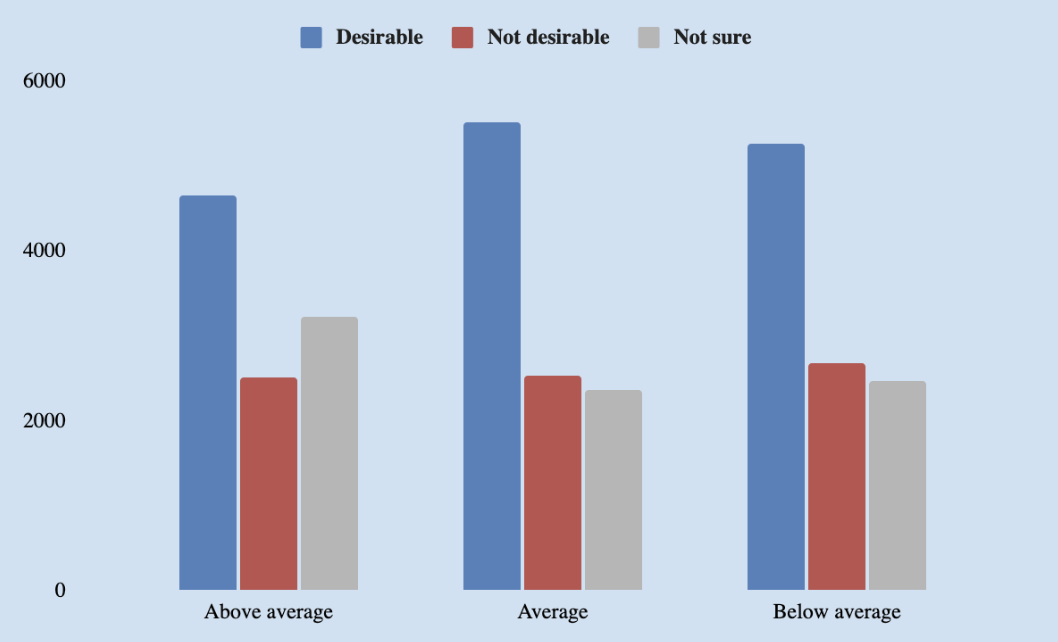
Higher earners are actually the least supportive group. This finding challenges assumptions that enthusiasm for longevity rises alongside wealth. One possibility is that higher-income individuals think more about systemic consequences and institutional disruption. Another is that they already enjoy greater control over their time, reducing the perceived urgency of lifespan extension.
Regardless of the explanation, support is not simply a luxury preference of elites.
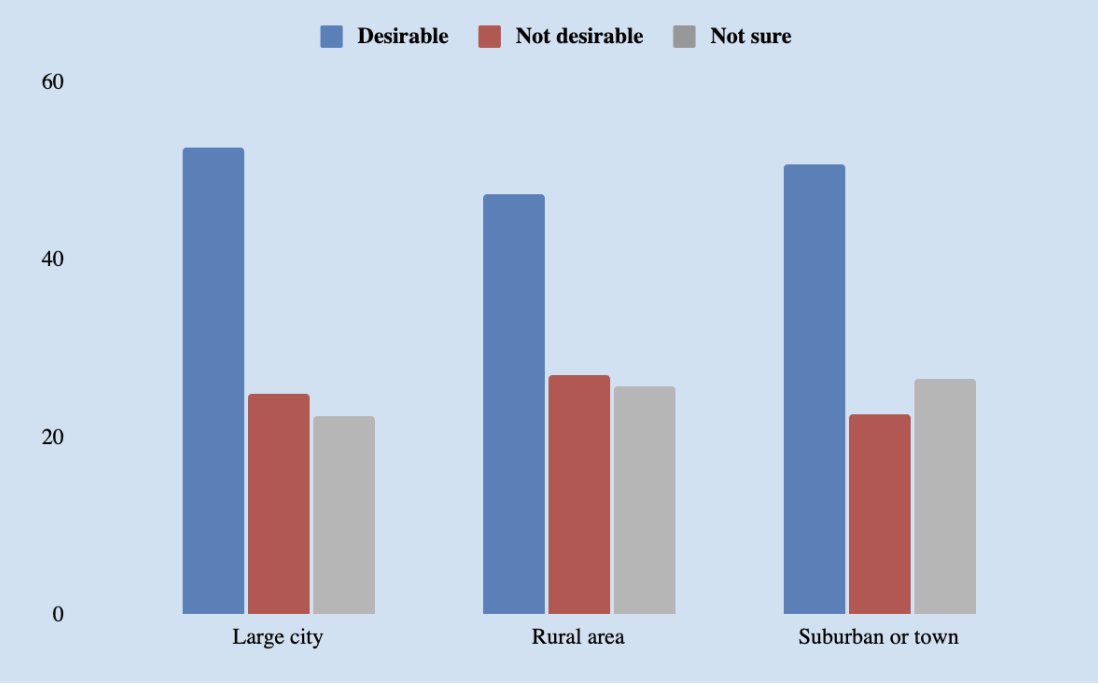
Cities Are More Enthusiastic—But Not Dramatically So
Urban residents show the highest support.This mirrors broader patterns seen in attitudes toward science and innovation. Yet the gap remains relatively modest. Rural respondents are still clearly net positive, suggesting that the appeal of healthy longevity extends well beyond urban innovation hubs.
What This Means for the Longevity Movement
The central lesson of the survey is that the public is more supportive of healthspan than lifespan. People overwhelmingly understand the appeal of remaining healthy for longer. What they have not yet decided is whether radically extending human life would make society better. This distinction matters. For decades, longevity advocates have often emphasized the extraordinary potential of extending lifespan. Yet the data suggest the most persuasive public narrative may be far simpler: People want fewer years of illness, frailty, disability, and cognitive decline. That message enjoys broad intuitive appeal. The challenge for the field is that technical success alone may not generate public legitimacy. Future breakthroughs will need to answer questions about fairness, accessibility, affordability, and social consequences just as convincingly as they answer biological questions about aging.
Conclusion
The world is cautiously open to radical life extension. Support exists across every major region, spans all age groups, and exceeds opposition globally. But enthusiasm remains softer than many advocates assume. The survey suggests that people are attracted to the promise of longer, healthier lives, yet remain uncertain about what a much longer future would mean for society. In short, the public appears ready for longevity medicine.
The good news of the month: World-first cellular reprogramming trial
In a world-first milestone for longevity biotechnology, the first patient has received a partial cellular reprogramming therapy designed to make aged cells behave like younger ones. The clinical trial, led by Life Biosciences, is testing whether three rejuvenation genes can regenerate damaged optic nerve cells in glaucoma patients, marking the first human test of a technology many researchers believe could one day transform age-related medicine.
News of Heales and the Longevity Community: Healthy Ageing & Longevity Assembly 2026
The Healthy Ageing & Longevity Assembly 2026 brought together scientists, clinicians, policymakers, and community leaders across Lithuania for a week-long series of events dedicated to advancing healthy longevity. The assembly highlighted the growing momentum behind evidence-based longevity medicine, ageing research, and cross-sector policies aimed at extending healthy lifespan in Europe and beyond.
For more information