
In the long term, I hope to create superhumans. I want to help people live longer and healthier lives by getting the most out of the body in a biological way. The Flemish Laurent Simons (15 years old) is one of the youngest academics in the world to obtain a PhD. He successfully defended his thesis in quantum physics at the University of Antwerp (17 November 2025, De Standaard, translation).
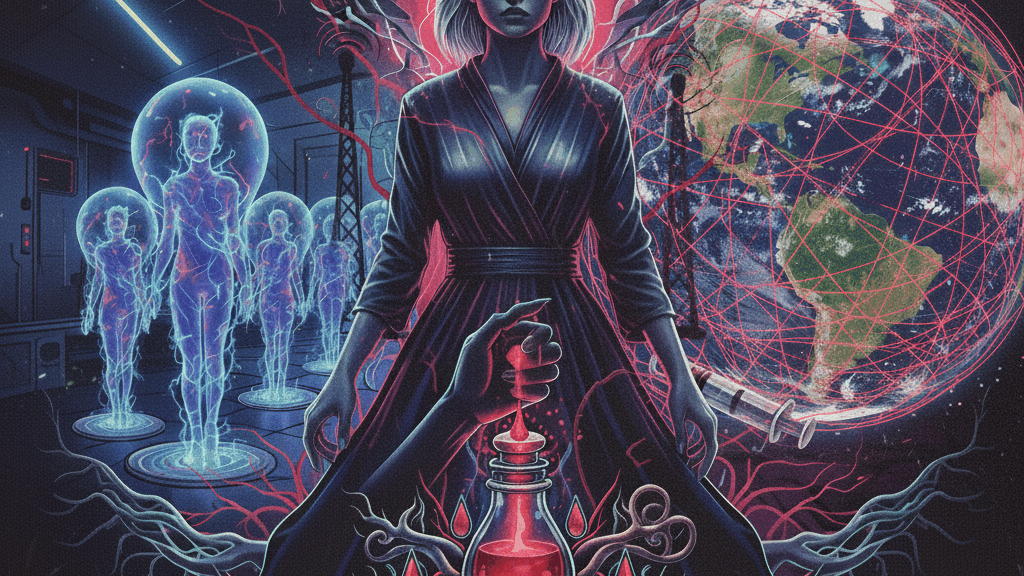
This month’s theme: Disproving longevity conspiracy theories
Science progresses in many domains. Rich people are more powerful than ever. Money can pay for research. Some “conspiracy theorists” imagine that a few of those rich people use secret ways to live far longer than “normal” humans. Actually, very rich people often go to very expensive longevity clinics, pay private, costly medical doctors, and test complex rejuvenation therapies. However, they die and will continue to die of diseases related to old age, like you and me, even if a bit later than you and me.
In this newsletter, some information to disprove conspiracy theories about longevity.
- The “MedBed” Myth
According to certain online communities, “MedBeds” are advanced medical devices capable of rapid healing, age reversal, and tissue regeneration.
Some narratives mention historical figures, such as John F. Kennedy, purportedly being kept alive using this technology. Others refer to statements circulating on social media claiming that MedBeds are part of a hidden health initiative. This false information was even available for a few hours to consult on the Social Truth account of Donald Trump
There is no verified evidence that such devices exist. Contemporary medical progress, such as stem-cell therapies, organ repair, and regenerative medicine, moves forward through incremental research, clinical testing, and regulatory review. These approaches show promising long-term potential but do not resemble instant or universal healing technologies. At present, “MedBeds” remain pure science fiction.
- Young blood or the adrenochrome myth
This conspiracy theory claims that global elites or Hollywood celebrities extract adrenochrome from children’s blood to stay young or boost vitality. It often includes dramatic claims of secret networks, ritualistic practices, or “youth harvesting,” turning a simple biochemical concept into a fantasy.
Adrenochrome is merely an oxidation product of adrenaline: a molecule your body produces naturally in small amounts. It lacks rejuvenating, anti-aging, and energizing properties. It is not difficult to produce, not rare, and not the basis of any longevity treatment. The myth’s origins come from misinterpretations of literature (including Hunter S. Thompson’s fictional writing) and viral online stories. Science-based longevity research focuses on caloric restriction, senolytics, gene therapy, and cellular repair.
The myth partly persists because of confusion between adrenochrome and legitimate medical or experimental practices involving blood plasma. For example, tech entrepreneur Bryan Johnson publicly experimented with plasma exchange (“young plasma” transfusion) as part of his longevity protocol. Although highly publicized, controlled clinical studies have shown no evidence that young plasma transfusion produces meaningful or consistent anti-aging effects in humans. The FDA even issued warnings against providers selling “young plasma” as a rejuvenation therapy due to lack of scientific support. Some preliminary studies have suggested that certain filtered plasma fractions from young adult donors may help restore ovarian activity in menopausal women, but these results remain experimental and far from any proven anti-aging therapy
Some believe that pharmaceutical companies, the FDA, or governments suppress natural cures, especially for cancer, to protect profits. Online communities often claim that “miracle plants” or homemade remedies are intentionally kept out of the public eye.
It is true that pharmaceutical companies can make enormous profits with patented drugs. However, there is no credible evidence that effective cures are being hidden, even though pharmaceutical companies put a lot of energy into selling patented products and discouraging the use of other products.. In fact, many of modern medicine’s most important drugs do come from plants or natural sources:
- Paclitaxel from yew bark
- Vincristine/vinblastine from periwinkle
- Aspirin is derived from willow tree compounds
What patients need is reproducible clinical trials proving safety and effectiveness. The issue is not hidden cures, but rigorous testing and transparency in all forms of medicine.
Some online discussions propose that high-profile individuals have access to human clones for medical purposes, organ replacement, or even continuity of identity. This idea is sometimes invoked when celebrities appear different after illness or long periods out of the public eye.
Human cloning is highly unlikely to be possible with current knowledge, and current laws and ethical frameworks prohibit it. Animal cloning, while possible in certain species, remains technically challenging and is associated with significant health risks.
Modern regenerative medicine research focuses instead on stem cells, tissue engineering, and organ-on-a-chip models: approaches aimed at repairing or growing specific tissues rather than creating full human clones.
Some conspiracy theories suggest that modern technologies such as vaccines, 5G networks, or even microplastics are intentionally designed to reduce the global population or shorten human lifespans.
However, global demographic and health data indicate a long-term trend of increasing life expectancy over the past century, strongly linked to improvements in vaccination, sanitation, nutrition, and medical care.
Environmental health research monitors issues such as pollutants or microplastics, and these topics are part of ongoing scientific investigation. At the moment, sadly, we do not know how to stop the negative effects of microplastics.
However, available epidemiological evidence does, of course, not support the notion of an organized depopulation initiative through public-health or technological systems. Since microplastics are everywhere and 5G networks are especially present in areas where rich people live, it would be a conspiracy killing its own organizers if true.
Similar narratives appeared during the COVID-19 pandemic, when some groups falsely claimed that COVID vaccines were part of a coordinated effort to harm or depopulate the public. In reality, extensive clinical trials and ongoing safety monitoring have shown that COVID-19 vaccines significantly reduced severe illness and deaths worldwide, contributing to a return to normal life in many countries.
This theory asserts that the white trails left behind airplanes (“contrails”) are actually “chemtrails”—secret chemical agents dispersed by governments or private actors for population control, weather manipulation, or mind-altering purposes.
Numerous scientific investigations, including a systematic atmospheric chemistry review published in Environmental Research Letters, have found no evidence of unusual chemical agents in aircraft trails. Samples collected near airports and flight paths correspond to normal environmental levels of particulates, soot, and water vapor condensation.
Some narratives propose that humans in antiquity regularly lived for several hundred years and that modern institutions hide the evidence. These ideas often reference ancient texts such as the Hebrew Bible (e.g., Methuselah living 969 years) or the Sumerian King List, which describes early rulers with very long lifespans.
Archaeological and biological research does not support the existence of multi-century human lifespans. Skeletal remains from ancient civilizations (Egyptian, Mesopotamian, Greek, Roman, etc.) show life expectancies generally between 30 and 50 years, with some individuals living longer but never more than a hundred years. Most scholars interpret extreme ages in ancient texts as symbolic, mythological, or tied to storytelling traditions. No verified evidence suggests these long lifespans occurred or that relevant findings are being withheld.
The good news of the month. Genes of bowhead whales make fruit flies live longer
The extraordinary lifespan of the Arctic whale Bowhead whale (up to more than 200 years) has brought fresh hope to longevity science. Researchers led by Vera Gorbunova and colleagues have discovered that bowhead whale cells exhibit enhanced repair of DNA double-strand breaks. When the whale version of CIRBP was introduced into drosophila, it extended their lifespan and improved radiation resistance.
This suggests a possible gene-therapy or molecular pathway route for lifespan extension, not just in mice but potentially in humans, by enhancing genomic maintenance rather than relying solely on damage elimination.
News of Heales and the longevity community
The 8th Eurosymposium on healthy Ageing / Longevity should happen during the second semester of 2026 in Brussels during 2 days with 2 main themes. Among the possible domains, we could approach: European Health Data Space; CERN like Artificial Intelligence for longevity; Effects of electricity on longevity; Supercentenarians.
Many conferences about longevity happen. More information on the dedicated calendar of Aging biotech and of Nature Aging.
For more information